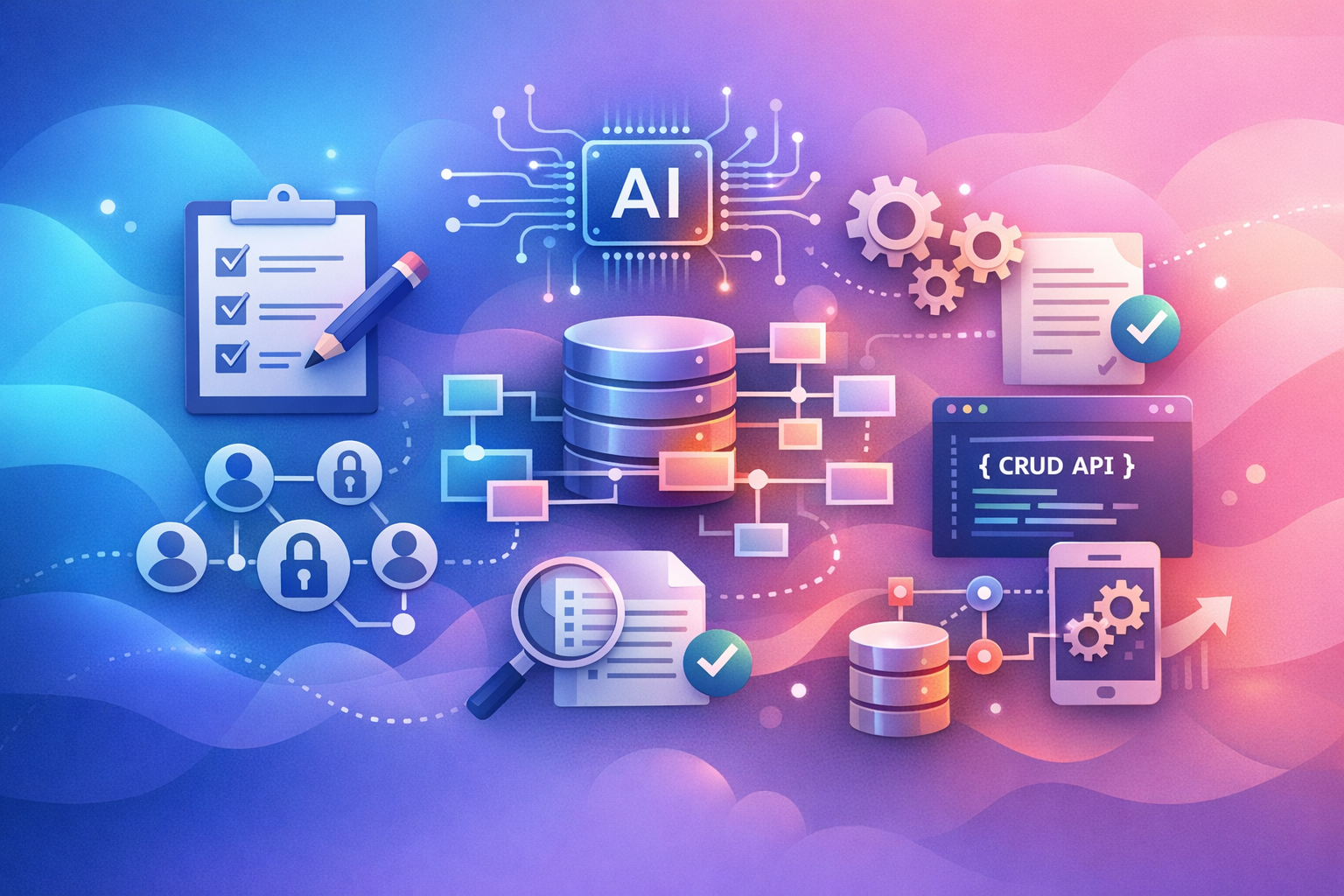
Change request, RBAC, audit trail, data model, API, CRUD — the world of AI app building has its own vocabulary. Here is every term you will encounter, defined in plain English, with a real example of why it matters for your business.
1. Data model
A data model is how your information is structured — what fields exist and how they relate.
Example: Customers linked to orders.
Why it matters: A clear data model prevents confusion and keeps your app reliable as it grows.
2. Workflow
A workflow is the sequence of steps your data goes through.
Example: Lead → contacted → converted.
Why it matters: Apps are built around workflows, not just data storage.
3. Change request
A change request is a structured way to modify your app.
Example: “Add a new field for customer priority.”
Why it matters: Keeps updates organized and prevents breaking your system.
4. RBAC (Role-Based Access Control)
RBAC defines who can see and do what in your app.
Example: Managers can edit, employees can only view.
Why it matters: Protects sensitive data and keeps operations controlled.
5. Audit trail
An audit trail records what changes were made and by whom.
Example: “Status updated by John at 3 PM.”
Why it matters: Helps track errors and maintain accountability.
6. API (Application Programming Interface)
An API allows different systems to communicate.
Example: Sending order data from your app to a payment system.
Why it matters: Enables integrations without manual work.
7. CRUD (Create, Read, Update, Delete)
CRUD refers to the basic actions you can perform on data.
Example: Add a customer, view details, update status, delete record.
Why it matters: Every app is built on these core actions.
8. Database
A database is where your data is stored in a structured way.
Example: A table of all customers.
Why it matters: It is the foundation of your app.
9. UI (User Interface)
UI is what users see and interact with.
Example: Forms, dashboards, buttons.
Why it matters: A clear UI makes your app usable.
10. Backend
The backend is the logic and data processing behind the app.
Example: Calculating totals or updating records automatically.
Why it matters: It powers how your app works.
11. Frontend
The frontend is the visible part of the app.
Example: The dashboard your team uses.
Why it matters: It’s where users interact with your system.
12. Automation
Automation means actions happen automatically based on rules.
Example: Send an email when a deal is closed.
Why it matters: Saves time and reduces manual work.
13. Integration
Integration connects your app with other tools.
Example: Syncing data with a payment or email tool.
Why it matters: Reduces duplication and improves efficiency.
14. Schema
A schema defines the structure of your database.
Example: What fields exist and their types.
Why it matters: Keeps your data consistent.
15. Validation
Validation ensures data entered is correct.
Example: Email must be in proper format.
Why it matters: Prevents errors and bad data.
16. Dashboard
A dashboard is a visual summary of key data.
Example: Total sales, active projects.
Why it matters: Helps you make quick decisions.
17. Pipeline
A pipeline shows stages in a process.
Example: Sales stages from lead to closed.
Why it matters: Tracks progress clearly.
18. Internal tool
An internal tool is software used by your team, not customers.
Example: CRM, inventory tracker.
Why it matters: Runs your operations.
19. Nocode
Nocode means building apps without writing code.
Example: Using visual builders or AI tools.
Why it matters: Makes software accessible to non-technical users.
20. AI app builder
An AI app builder generates apps based on your description.
Example: Describing a CRM and getting a working system.
Why it matters: Speeds up building dramatically.
Platforms like Avery.dev are built around many of these concepts, but simplify them so non-technical users can build effectively.
How to use this glossary
You don’t need to memorize everything. Use this as a reference when you encounter new terms. Understanding these concepts helps you build better systems and make better decisions.