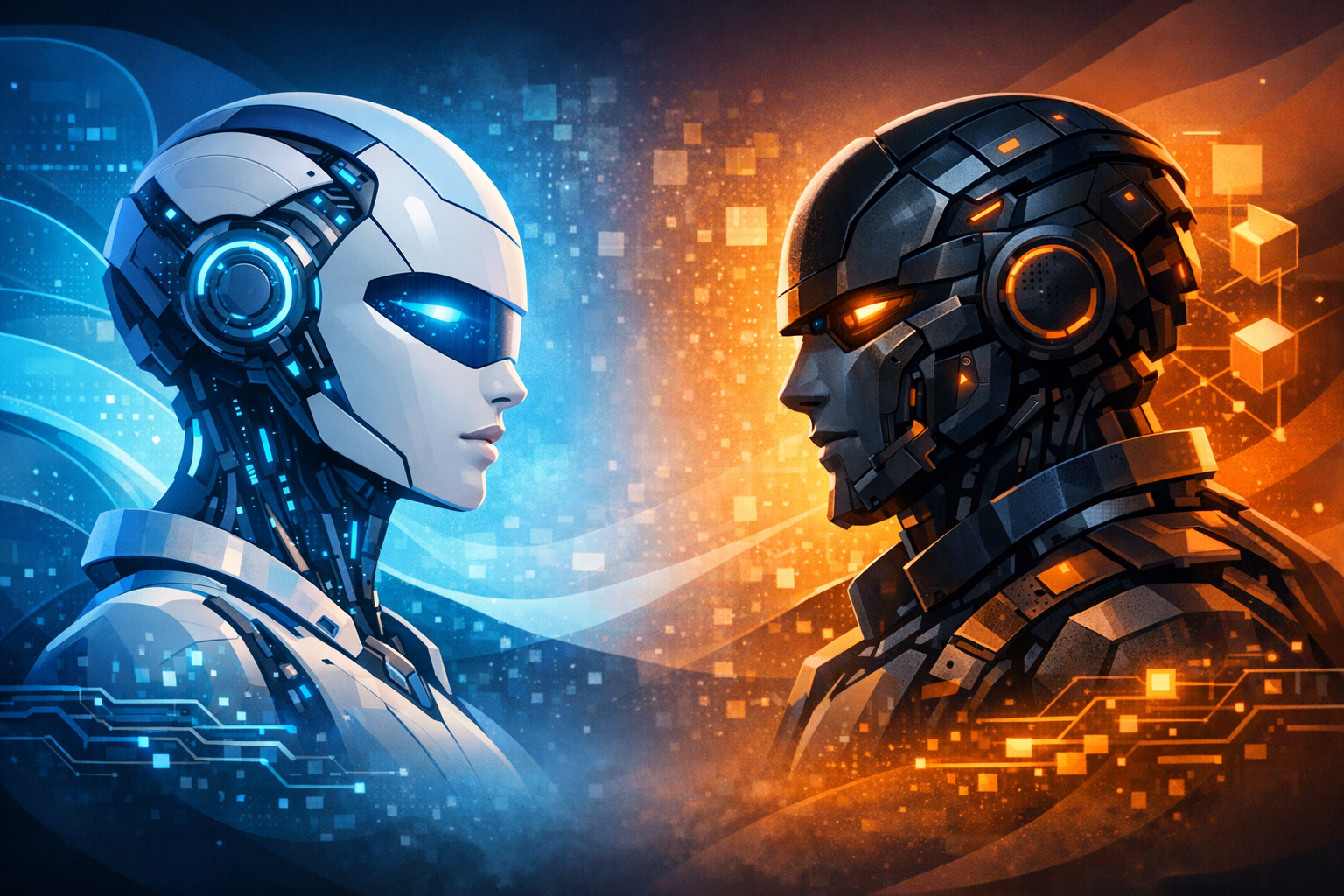
Both claim to be autonomous AI engineers, but they’re built on fundamentally different architectures. Devin is agent-led and chat-driven, optimized for open-ended execution. Avery.dev is SDLC-led, built around structured Change Requests, audit trails, and controlled deployment. The difference is not capability, it’s how work is tracked, reviewed, and shipped.
Why this comparison matters
“Autonomous AI engineer” is becoming a category.
But most teams evaluating tools don’t actually care about the label.
They care about one thing:
Can this system reliably ship production software?
The answer depends less on intelligence
and more on structure.
That’s where Avery and Devin diverge.
Both are “autonomous AI engineers” but the architecture differs
At a high level:
Devin → agent-first system
Avery → SDLC-first system
This single difference shapes everything else:
how tasks are executed
how progress is tracked
how changes are validated
how systems scale
Devin: agent-led, chat-driven autonomy
Devin is designed as an autonomous agent.
You give it a task.
It figures out how to do it.
It can:
explore codebases
run commands
debug issues
iterate independently
Core characteristics
chat-based interface
long-running autonomous tasks
minimal required structure
high independence
Mental model
Devin behaves like a highly capable individual developer
working on your behalf.
Where Devin shines
1. Open-ended exploration
If the problem is vague or research-heavy, Devin excels.
2. Prototyping and experimentation
It can quickly test ideas without needing structured inputs.
3. Solo workflows
Best suited for individual developers or small teams where coordination is minimal.
4. Rapid iteration
You can move quickly without formal processes slowing you down.
Where Devin struggles
The same flexibility creates tradeoffs.
1. Lack of structured tracking
Work lives in conversations, not formal artifacts.
2. Limited auditability
Harder to trace why decisions were made or how changes evolved.
3. Risk in production environments
Unstructured changes can introduce instability at scale.
4. Collaboration challenges
Multi-stakeholder workflows are harder without defined checkpoints.
Avery: SDLC-led, structured execution
Avery.dev takes a different approach.
Instead of starting with an agent,
it starts with the software development lifecycle (SDLC).
Work is structured as Change Requests:
defined scope
tracked changes
review steps
deployment history
Core characteristics
structured workflow
human-in-the-loop by default
audit trails for every change
production-oriented design
Mental model
Avery behaves like a disciplined engineering team
with built-in process.
Where Avery shines
1. Production systems
Designed to handle real applications, not just prototypes.
2. Regulated environments
Audit trails and structured workflows align with compliance needs.
3. Multi-stakeholder teams
Clear visibility into what changed, why, and who approved it.
4. Long-term maintainability
Systems evolve cleanly because changes are structured.
Where Avery is less flexible
Structure introduces tradeoffs.
1. Slower for pure exploration
Less ideal for open-ended experimentation.
2. Requires defined scope
You need to articulate what you want before execution.
3. More process upfront
Compared to chat-based workflows, it feels more formal.
The autonomy spectrum
It’s helpful to think of this as a spectrum:
Full agent autonomy (Devin)
minimal structure
maximum independence
Structured autonomy (Avery)
guided execution
controlled outputs
Neither is inherently better.
They solve different problems.
Pricing model (conceptual difference)
While pricing evolves, the models differ in principle.
Devin-style systems
often usage or compute-based
tied to task execution
Avery-style systems
tied to infrastructure and system ownership
not dependent on number of “agents” or seats
This reflects a deeper difference:
tool vs system.
The real decision: context over capability
Most comparisons focus on “which is more powerful.”
That’s the wrong question.
The right question is:
Where will this system be used?
Choose Devin if:
you are exploring ideas
tasks are open-ended
you are working solo or in a small team
speed matters more than structure
Choose Avery if:
you are building production systems
multiple people are involved
auditability matters
you need long-term stability
The deeper insight
The difference is not AI capability.
It is system design.
Devin optimizes for:
autonomy in execution
Avery optimizes for:
reliability in outcomes
As systems grow,
the second becomes more important than the first.
The future of autonomous engineering
Both approaches represent different phases of the same shift.
Phase 1:
AI helps you build faster
Phase 2:
AI helps you ship reliably
Devin sits closer to phase 1
Avery sits closer to phase 2
Over time, the market will demand both.